For the first time in Germany, f³ – Freiraum für Fotografie is presenting a comprehensive retrospective of the Austrian-British exile photographer Edith Tudor-Hart (born in Vienna in 1908, died in Brighton in 1973).
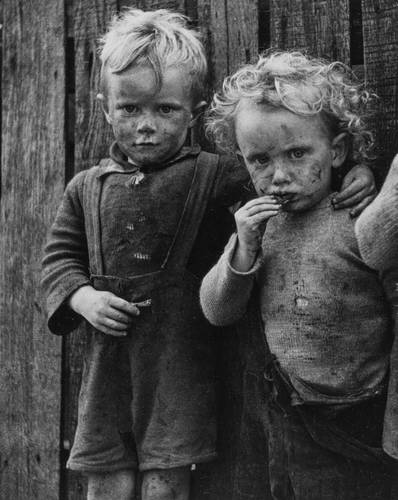
In her work, she passionately highlighted social injustices, addressing issues such as poverty, integration, and women's rights, and depicting the living conditions of the working class. She photographed life in Vienna's backyards, on the Danube, and in the Prater; protests against rising fascism; miners, factory workers, and fishermen in Wales; the post-war women's movement; and the new institutions of progressive education.
Coming from a secular Jewish family in Vienna and a staunch communist, her life was marked by political persecution and personal tragedies: she first trained as a Montessori kindergarten teacher in Vienna and London, where she also worked in the profession. In the late 1920s, she studied photography and graphic design at the Bauhaus in Dessau, where she developed her objective, socially critical style. In 1933, she was imprisoned for her involvement in the Communist Party and fled fascism to go into exile in England. She married her husband, British physician Alexander Tudor-Hart, at the British Embassy in Vienna so that she could leave for Great Britain as his wife. In London, she successfully continued her photographic work and published numerous reports in left-wing newspapers and magazines, including the Arbeiter Illustrierte Zeitung (AIZ), Der Kuckuck, and Picture Post.
It is believed that Edith Tudor-Hart had been working with Soviet intelligence and secret services since her teenage years. However, her activities as an agent remained undiscovered throughout her life. It is historically documented that she played a key role in recruiting the famous spy ring known as the “Cambridge Five.” Fearing surveillance and exposure, she destroyed some of her negatives in the 1950s and ended her career as a photographer due to pressure from the British secret service and for health reasons. To earn a living, she opened a small antique bookshop. Edith Tudor-Hart died in Brighton in 1973. It was not until decades after her death that her photographic work was rediscovered and reevaluated. Her photographic estate is now in the archives of the Fotohof Salzburg.
Runtime: Sat, 07/03/2026 to Sun, 17/05/2026